
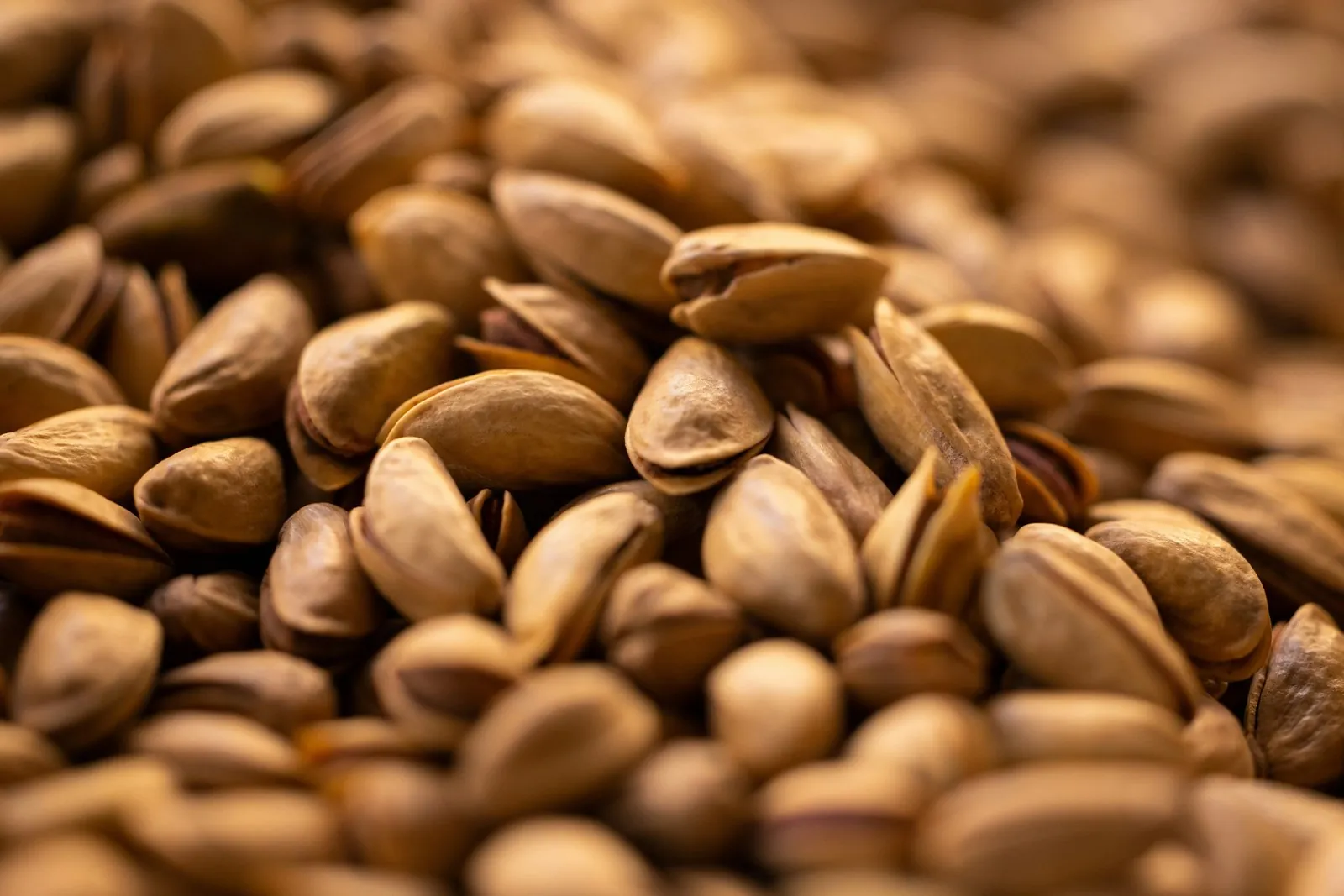
A pistachio with a protected name
“Antep pistachio” (Antep fıstığı) is not a marketing label. It is a registered designation of origin in Türkiye: the name was registered in April 2000 (registration no. 27), on an application by the Gaziantep Chamber of Commerce, and it covers pistachios grown in Gaziantep province in southeastern Türkiye.
Gaziantep, historically called Antep, is the traditional centre of Turkish pistachio growing and processing. Nizip, where our pistachio supplier is based, is one of the province’s main growing districts. Neighbouring provinces such as Şanlıurfa also grow large volumes, but only Gaziantep pistachios can carry the protected name.
- Protected name
- Antep Fıstığı, designation of origin (TR reg. no. 27, 2000)
- Origin
- Gaziantep province, Türkiye
- Main Turkish cultivars
- Kırmızı, Uzun, Halebi, Siirt
- Harvest window
- Late July (early harvest) to October
Grown by climate, picked by hand
The pistachio tree needs cold winters and long, hot, dry summers. Antep orchards get both: the trees need roughly 600 to 1,050 hours below 7.2 °C each winter, and they grow in deep, sandy-loam, partly calcareous soils with hot, dry summers to ripen the nuts.
Many Turkish orchards are still dryland rather than irrigated, which keeps yields modest. Harvest is largely manual, and the nuts are traditionally sun-dried after hulling. Like all pistachios, the trees are alternate-bearing: a heavy crop one year is often followed by a light one, which is worth remembering when you plan annual volumes and pricing.
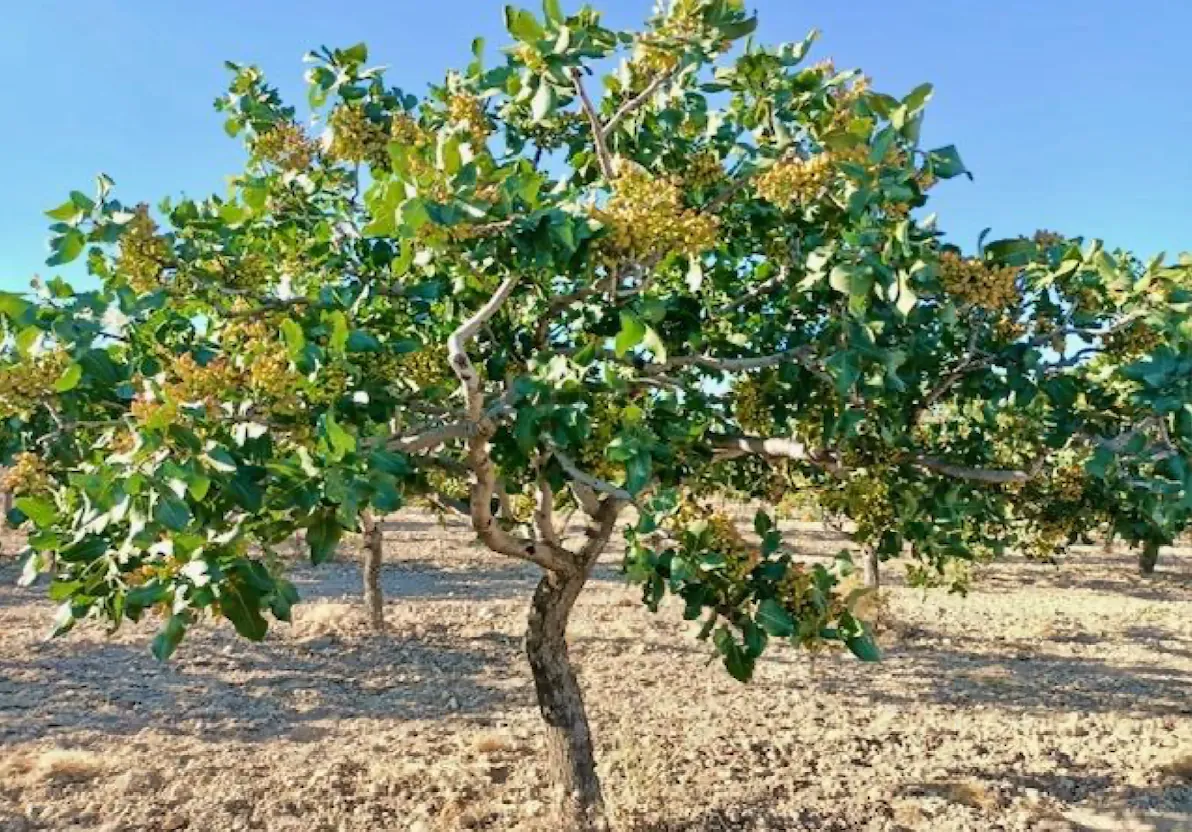
Smaller nut, bigger flavour
Compared with the large Kerman-type pistachios that dominate supermarket shelves in the United States, Turkish cultivars produce smaller, more elongated nuts with a lower natural splitting rate. What they offer instead is taste: researchers note that Turkish pistachios are preferred in many European and American markets for their flavour and their uniformly green kernels.
That combination explains how Antep pistachios are used. Because fewer shells split open naturally, a larger share of the crop is shelled and sold as kernels, and the intense flavour and colour make those kernels the first choice of confectioners, pastry makers and ice-cream producers.
Two harvests, two products
Antep pistachios are harvested at two very different stages, and knowing which one you need is the most important part of a specification.
- Early harvest (boz iç or boziç): picked from late July to mid-August, before the nut is fully mature. The kernel is small, soft and a vivid, deep green. It is the prized ingredient in baklava, pistachio paste and premium pastry, and it commands a premium price.
- Ripe harvest: picked from late August into October, when the hull turns rosy and the nut is full. Kernels are larger, with a green-to-yellow colour and a richer, roasted-nut character. This is the pistachio for roasting, salting and snacking, sold in shell or as kernels.
A nutrient-dense nut
Pistachios are among the more protein-rich nuts. According to USDA data, 100 g of dry-roasted pistachios provides about 21 g of protein and 10 g of fibre. Of the roughly 46 g of fat, most is unsaturated (about 25 g monounsaturated and 13 g polyunsaturated), and the same serving supplies around 1,000 mg of potassium. Exact values vary with cultivar, harvest and processing, so ask for the specification sheet of the lot you are buying.
How to specify Antep pistachios
A clear specification gets you an accurate quote and the product you expect. When you ask for pricing, tell us:
- Form: raw in shell, roasted and salted in shell, kernels, roasted kernels, slivers, or powder and paste.
- Harvest and colour: early-harvest green kernels for confectionery, or ripe-harvest nuts for snacking.
- Size and grade: nut count per ounce or kernel size, and acceptable levels of broken kernels and closed shells.
- Food-safety limits for your market: moisture, aflatoxin and microbiological limits. Limits in the EU are strict, so state them up front.
- Packaging and labelling: bulk cartons or vacuum bags, or retail packs in your language, private label included.
- Documents: certificate of origin, health certificate, and certificates of analysis for each lot.
Our pistachio supplier in Nizip has more than 30 years of processing experience and supplies raw, roasted, kernel and powder formats to your specification. Send us your requirements and we will come back with samples, specifications and pricing.
Fuentes
- Antep Fıstığı: geographical indication record, Gaziantep Metropolitan Municipality
- Pistachio production and industry in Turkey: current status and future perspective (Ak, Karadağ & Şakar, 2016), CIHEAM, Options Méditerranéennes A 119
- Antep Kurabiyesi geographical indication (early-harvest boziç pistachio), TÜRKPATENT
- Early harvest, pricey pistachio, Hürriyet Daily News
- Nuts, pistachio nuts, dry roasted, with salt added (USDA SR Legacy, FDC ID 169426), USDA data via GetFoodFacts